

Outbound Strategy · Prepared by RevSculpt

The work is decided months before it happens. You find out afterwards.

HFH Grupp repairs and rebuilds ship hydraulics and machinery from a workshop in Tallinn and a fleet of mobile vans. Pumps, cylinders, valves, winches, steering gear. A class society has inspected that workshop and approved the work done in it.

How the pipeline compounds
Findings
Paris MoU inspection codes mapped to what HFH actually repairs
Windows
Class survey and docking cycles, weeks before scopes are written
Reach
Baltic van run, or a flyable crew to any port that carries the scope
Compound
Fixed once, fixed by HFH forever. The ship comes back
TAM
The global merchant fleet, with the Baltic as home ground
HFH's Tallinn workshop plus a flyable mobile crew means the addressable fleet is not a radius, it is the world merchant fleet. Every figure below carries a named source. Ranges, not precision. Refined once we start pulling the actual inspection and fleet data.

Global merchant fleetThe universe HFH can serve

~109,000+ merchant vessels of 100 GT and above worldwide (source: UNCTAD Review of Maritime Transport 2024)

  • Ships with HFH-relevant machinery: cargo, tanker, bulk, RoPax, ferry, offshore support, tug and workboat. Roughly 50,000 to 60,000 vessels in scope for hydraulics, deck machinery and ship pumping equipment.
  • Where the flyable model wins: ports and yards where a superintendent needs a specialist crew for 2 to 10 days, and the local option is not RINA-approved for the scope.
  • Home ground: Baltic operators and Baltic port calls remain the warmest lane. Global reach opens the flyout pool on top.
HFH does not need every ship. HFH needs the small share where a documented finding, a class window or a scheduled scope aligns with a port a specialist crew can reach.

Global inspection flowThe signal pool

~65,000+ Port State Control inspections per year across the major MoUs combined (source: Paris MoU, Tokyo MoU, USCG Annual Reports)

  • Paris MoU (Europe + Canada): ~17,000+ inspections annually (source: Paris MoU Annual Report 2023).
  • Tokyo MoU (Asia-Pacific): ~30,000+ inspections annually (source: Tokyo MoU Annual Report).
  • USCG (United States): ~10,000+ inspections annually (source: USCG PSC Annual Report).
  • Plus: Indian Ocean, Mediterranean, Caribbean, Latin America MoUs.
  • Deficiencies in HFH scope: a specific subset of MoU codes maps to hydraulics, deck machinery and pumping work HFH actually does.
Every MoU publishes its results. That is what makes them signals, not marketing claims.
The addressable pool for HFH is the global merchant fleet, filtered to ships with a documented reason to book workshop work in a port a flyable crew can reach. That is a knowable, refreshed list, not a static market.
01
Who actually has to say yes
HFH is a machinery and systems workshop, not a dock. No steel, no hull, no coating, no dry docking. That one fact decides which signals are worth building and it turns the repair yards into a channel rather than a competitor.
SegmentWhy they matter to HFH
Ferry and RoPax operatorsRamps, hatch covers, steering, mooring winches, stabilisers. High duty cycle, tight turnarounds, and they run your corridor every day.
Cargo and short-sea operatorsHatch covers, cranes, windlasses, steering gear. The largest population of vessels inside your radius.
Tanker operatorsCargo pumps, pump room hydraulics, piping. Named directly in your RINA approval.
Tug, workboat and dredger operatorsDeck machinery under constant load, and usually no in-house engineering department to fall back on.
Offshore and support vesselsWinches, cranes, thruster and stabiliser hydraulics.
State and municipal fleetsIsland ferries, navy, border guard, port and waterway authorities. They buy through public tender, with published scopes and real dates.
Ship management companiesThey run vessels for owners and hold the technical budget and the docking plan.
Repair and refit yardsThey win the dock, then need machinery subcontractors. A partner channel, not competition.
Fishing fleet ownersDeck machinery, smaller scopes, faster decisions, and almost nobody competing for their attention.

The people we write toBy title, not by inbox

Technical SuperintendentFleet Technical ManagerTechnical DirectorChief EngineerFleet Chief EngineerSuperintendent EngineerMachinery SuperintendentDrydock ManagerRepair ManagerMaintenance ManagerProcurement ManagerPurchasing ManagerContracts ManagerYard: Production ManagerYard: Subcontracting ManagerYard: Project Manager
On smaller vessels the owner or the captain is often the entire decision. Built person by person, with a verified work email. Not a scrape of info@ addresses.

LanguageThree markets, three languages

  • HFH already runs the website in English, Estonian and Russian, which is the right instinct
  • Buyers inside HFH's service area are Estonian, Finnish and Russian-speaking
  • Finnish prospects get Finnish copy, not English copy with a Finnish greeting on top
  • Copy also splits by service line, because a ferry technical superintendent and a fishing vessel owner do not read the same message
02
The three signals we build and maintain
A signal is a public, dated fact about a named vessel that tells us work is coming before the work is handed out. These three fit what HFH is approved to do.

Signal 01Ships with an open inspection finding

  • Every Paris MoU inspection in this region is recorded in a publicly searchable database
  • Findings are logged by numbered code, with the date, the port and the action required. Most have to be rectified before sailing or within a stated period
  • So we can see what was found, on which vessel, when, and what has to be fixed
  • The codes in 03.1 below are not a category that resembles HFH's work. They are the services page in an inspector's handwriting
Source: Paris MoU public inspection database, backed by the EMSA THETIS system.

Signal 02Ships due for survey

  • Classed ships live on a fixed survey cycle. Annual surveys, an intermediate around the halfway mark, a full class renewal every five years, docking surveys on a set interval
  • Build year plus last known docking places a vessel in that cycle. Class registers and Equasis give us both, free
  • We add the ages where machinery reaches the point that rebuilding beats running to failure, and any announced modernisation programme
  • We derive a window, we never claim a date. A superintendent knows their own schedule better than any database
The decision happens weeks to months before the docking, when scopes are written. That is the moment we aim at.

Signal 03Ships with a scheduled workshop window

  • Two pools worth building. First: Baltic-repeat callers where the mobile van reaches the berth. Second: global flyout candidates where a specialist crew is worth the travel
  • Port authorities publish schedules and AIS shows which ships call where and how often, worldwide
  • We rank by scope value and window length, not by vessel size. A ten-day drydock in Rotterdam beats a two-day port call in Tallinn
  • The flyout economics are simple: a scope big enough to cover the crew, the tickets and the workshop margin
  • This is the signal that filters for whether HFH can make money on the job at all
The best name in the whole system is a combination. A vessel carrying an open machinery finding with a survey window approaching. A documented reason to act plus a fixed date to act on. Signals 01 and 02 are built separately so that the overlap can be scored and pushed to the top of the queue.
Case study video
A short walkthrough of how a signal engine like this one runs in practice, narrated over real examples.
Prefer to open in a new tab? Watch on Loom.
03
Events: turn a trip into a full diary
HFH does not do this today. No events page on the website, no booth listing, no meeting form. Which means that if HFH attends anything, someone is walking a hall and hoping.
EventWhenWhy it matters for HFH
SMM Hamburg1 to 4 September 2026The largest maritime technology fair in Europe. Yards, operators and technical buyers in one place. Five weeks from today.
Navigate, Turku24 to 25 November 2026The Finnish maritime industry event, in the country that is half HFH's service radius.
Estonian Shipowners' Association International Maritime ConferenceAnnual, dates announced each yearNine members, in one room, on HFH's doorstep.
Shippax Ferry Conference20 to 22 April 2027Ferry and RoPax operators, HFH's highest duty cycle segment.
Nor-Shipping, Oslo7 to 11 June 2027Broad Nordic maritime, useful for the offshore and workboat side.
Europort, Rotterdam2 to 5 November 2027Wider European reach. Worth it only once the closer events are producing.
"Five weeks from today" is relative to the document date of 31 July 2026. Dates come from the organisers' own sites and get reconfirmed before any campaign is built.

What we run per eventFive stages, one outcome

  • 6 to 8 weeks out: pull the exhibitor and attendee lists, find the technical, machinery and procurement people, build the target list
  • 4 to 6 weeks out: start outreach, aimed at booked meetings rather than awareness
  • 2 weeks out: confirm slots, chase the maybes, hand HFH's team a schedule
  • During: live follow up on no-shows and walk-ups
  • After: follow up everyone on the list whether they met HFH or not, then roll the list into evergreen so it keeps working

The near-term decisionSMM is five weeks away

  • 1 to 4 September 2026 is tight for a first pass, but not impossible
  • If HFH wants it, it becomes the first thing we do and everything else in the first ninety days shifts behind it
  • If HFH would rather start clean, Navigate in Turku on 24 to 25 November gives us a full runway and sits in HFH's strongest export market
  • Dates here come from the organisers and get reconfirmed before any campaign is built
04
Investment
Two ways to run it. Take one to prove the mechanism, or run both together for the full machine. Event support is added per show HFH works. All pricing in EUR, monthly, no setup fee, no long lock-in.

How the pricing worksSimple and transparent by design

Two clean options instead of a five-tier ladder. Evergreen (5,500) for always-on reach across ship managers and operators worldwide, with Baltic operators worked first. Signal outreach (7,500) for the three custom watchers built for HFH. Run both together for 10,000 and save 3,000 versus buying them separately, and a warm caller is bundled in at no extra cost. They work better together anyway: the evergreen list makes the signal outreach warm, and the warm caller qualifies every engaged lead before HFH's team ever picks up the phone.

What is always includedBaseline across every programme

  • Human-reviewed copy through the Inbox gate: Deliverability score of 90 or higher and ICP Clarity of 75 or higher, same pass
  • Every reference to a vessel or a finding is from a real public record, never invented
  • CRM integrated: replies routed to the right person at HFH and logged
  • Separate warmed sending domains; hfh.ee reputation is never at risk
  • Monthly reporting on meetings, not open rates
Evergreen outreach
Always-on reach across ship managers and operators worldwide, with Baltic operators worked first.
€5,500/mo
  • Global list of ship managers, operators and owner-operators, prioritised by fleet size and vessel type
  • Enriched to the technical superintendent with a verified work email
  • Multichannel: email plus LinkedIn for senior technical roles
  • Localised: English, Estonian, Russian per recipient
  • Replies routed to HFH's team, logged, tracked to outcome
  • Monthly senior review
Best when HFH wants the operator market to recognise the workshop, so a scope in twelve months lands on someone who already knows the name.
Signal outreach
Three custom watchers built and maintained. Ship-level targeting, timed to the port call and the survey window.
€7,500/mo
  • Signal 1: Paris MoU deficiencies filtered to HFH workshop scope
  • Signal 2: AIS-driven port call list worldwide, refreshed weekly, ranked by scope value and window length
  • Signal 3: class survey and drydock window model
  • Composite: deficiency plus upcoming port call = the hot list
  • Ship-to-superintendent enrichment and verification
  • Weekly reporting
Best when HFH wants precision and timing on the ships that actually have work coming, this quarter, in ports HFH can reach.
Recommended
Both together · 10,000 / month
Signal outreach plus Evergreen run as one machine. The signal lists sit on top of the evergreen base, so a manager we contacted cold today gets contacted again the moment one of their ships shows a signal.
  • Everything in Evergreen outreach
  • Everything in Signal outreach (three feeds plus composite)
  • Warm calling included. Dedicated warm caller phoning leads who have already engaged (opens, replies, LinkedIn responses, event scans). Presents HFH, qualifies the lead, books a meeting for HFH's team with a full brief already in the CRM.
  • Priority senior review plus monthly roadmap
  • 3,000 below buying Evergreen and Signal separately. Warm calling on top at no extra cost when bundled
Optional add-on

Events, per show HFH works.

Full pre-show, on-show and post-show campaign per event. Not always-on. Billed only when HFH attends or exhibits.

Add-on · Events
Event campaign
+€2,500/event
Target list built 6-8 weeks out, outreach starts 4-6 weeks out, meetings confirmed in the final two weeks, live follow-up during, and the whole list rolls into evergreen after.
SMM Hamburg Nor-Shipping Europort Shippax Ferry Conference Baltic Ports Conference + Estonian, Finnish, Polish maritime clusters
Most clients pick two or three shows a year and treat the rest as evergreen. Each show equals 6 to 12 months of compounding pipeline.

Why the maths worksThe payback shape

Workshop scopes for merchant vessels are not small. A repeat customer, a repair contract, or a scheduled workshop package can easily cover a year of the full programme.

Set that next to the fee. A year of the full programme (10,000 × 12 = 120,000) is a small share of even a modest recurring account. We do not need to fill HFH's pipeline with fifty new customers. We need to put HFH in front of the right superintendent at the right moment, and win the account that keeps coming back.

Confirm HFH's average project value, win rate and capacity ceiling, and this stops being "a small share" and becomes a real number.


What is explicitly NOT hereBecause it does not fit HFH

  • Google Ads and paid. Superintendents do not search for workshops. Not our motion.
  • Volume-only cold email. Maritime is small and connected; volume-only destroys trust. Every message is signal-referenced.
  • Accusatory Paris MoU messaging. We use deficiency data as timing information, not as a stick. If a message would embarrass the reader, it does not go out.
  • Any client reference or performance claim taken from hfh.ee. Not without HFH's separate written verification.
Every message clears the RevSculpt Inbox gate: Deliverability score of 90 or higher and ICP Clarity of 75 or higher, both in the same pass. Every fact about HFH on the page is either sourced from hfh.ee or flagged for HFH to confirm. Real senior review before launch, not a template on autopilot. Confirm minimum contract term before proposal.
05
Who’s Leading It
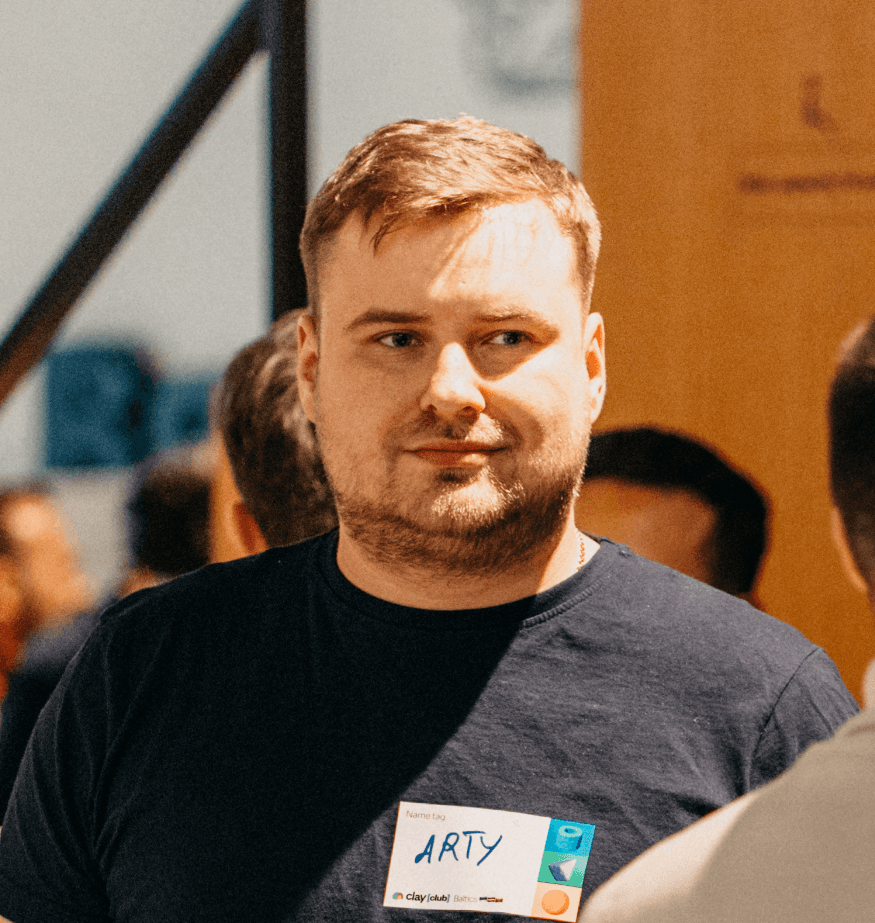
Artyom Jurkevich
Salesforge Forge Expert Clay Expert
Artyom Jurkevich
Founder, RevSculpt
  • 12 years in B2B sales, founder-led outbound
  • Two-time agency founder, one successful exit
  • GTM Club host and speaker in Riga, Latvia
  • $30M pipeline driven for clients across 15 verticals
Industries we work with
Healthcare TechFinTechB2B Marketing AgenciesSupply Chain & Logistics TechConstruction TechPropTechProfessional ServicesCyberSecurityMaritimeMarTechVCsAccelerators
Approved by backed startups
Top brands we’ve helped our clients land
OSM Thome
Maersk
Miro
Client
Client
Client
Client
Client
Client
Client
Top Rated GTM Agency
5/5